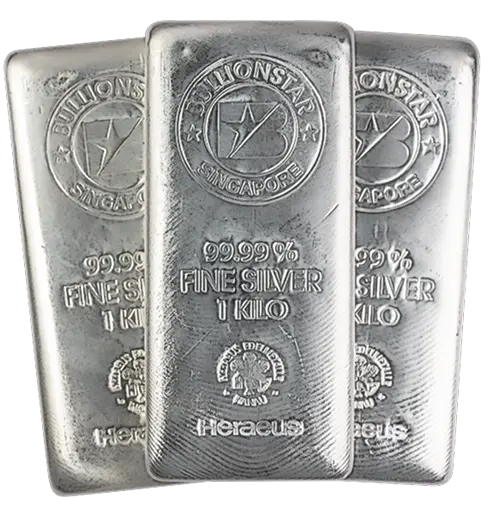
For as long as gold has been money, silver has been money's other half, known as "the People's Money". It was the metal in most people's pockets for most of history, while gold sat in vaults and treasuries. Today, silver still trades as a monetary metal, but it also does something gold doesn't: it gets used up. Over half of annual silver demand goes into electronics, solar panels, and industrial applications that consume the metal rather than store it.
That combination, a monetary history as old as gold's and an industrial demand gold doesn't have, is what makes the case for silver different from the case for gold, not weaker, just different.
The "why" starts with what silver shares with gold: physical silver carries no counterparty risk and no default risk. It isn't a liability issued by a bank, a company, or a government, so it doesn't depend on anyone else's promise. Where silver splits from gold is in how it behaves once you own it: a smaller, more industrially-exposed market means bigger price swings in both directions, and a lower price per ounce that changes the practical maths of storing and buying it.
This guide covers why silver deserves consideration in a well-built, diversified portfolio: what it shares with gold and where it genuinely differs, what physical silver costs to actually own, and how to buy, store, and sell it here in Singapore. If you're still weighing whether silver is right for you at all, see Is Silver a Good Investment? If you've already decided and want the practical comparison of bars, coins, ETFs, and mining stocks, our How to Invest in Silver guide walks through that in detail.
Please note that BullionStar does not provide investment or financial advice. The information below is for informational purposes only. Your individual circumstances and goals will always be the most important factors in any investment decision.
Why Invest in Silver? The Case for Physical Silver
Silver's case starts from the same place gold's does: physical silver is nobody's liability. It isn't a bank's promise, a company's balance sheet entry, or a government's bond, so it carries the same absence of counterparty and default risk that makes precious metals attractive as a store of value in the first place. Where silver's case adds something gold's doesn't is demand. Roughly 59% of everything mined or recycled each year gets consumed by industry rather than held by savers, a structural, growing source of demand pressure gold's case doesn't have to lean on.
A Monetary History as Old as Gold's
Silver has been used as money for as long as gold has. Gold tended to sit in treasuries or was used by the very wealthy; silver was the coin that actually changed hands, from Roman denarii to Spanish pieces of eight to the silver standards that underpinned trade across Asia and the Middle East well into the 19th and, in China's case, the 20th century. The word "dollar" itself traces back to the Joachimsthaler, a 16th-century Bohemian silver coin, and "pound sterling" originally meant, literally, a pound of silver. Even the US Constitution embedded that role directly: Article I, Section 10 barred states from making anything but gold and silver legal tender, and the 1792 Coinage Act defined the dollar as a specific weight of silver.
That history is why silver is sometimes called "the people's money," a monetary role every bit as old as gold's, just conducted at a different scale.
It's tempting to assume modern economies have outgrown the need for money a government can't simply print into existence. History says otherwise. Every one of these collapses happened because a currency could be created without limit, and each did:
Weimar Germany (1921–1923): war reparations and political crisis triggered hyperinflation so extreme that prices doubled every few days, wiping out the Mark's value entirely.
Yugoslavia (1989–1994): monthly inflation peaked at an estimated 313 million percent before the currency was scrapped and replaced.
Zimbabwe (2000s): monthly inflation hit roughly 79.6 billion percent by November 2008; the government eventually abandoned its own currency.
Venezuela (2016–2022): annual inflation reached an estimated 1.7 million percent in 2018 alone, forcing three separate currency redenominations, and was still running at 611% annually as of early 2026.
No civilization, however advanced, has proven immune to unchecked currency creation. Physical silver, like gold, has no printing press behind it.
An Industrial Demand Story Gold Doesn't Have
Gold's case rests almost entirely on being held. Silver's doesn't; it's also consumed. According to the Silver Institute, industrial demand hit a record 680.5 million ounces in 2024, around 58.6% of total global demand of 1.16 billion ounces that year, driven by electronics, electrical applications, and structural growth from solar panels and vehicle electrification.
That consumption has left the market in a supply deficit for six straight years running, a stretch that started in 2021 and is forecast to continue into 2026. It's worth being precise about what this does and doesn't mean: industrial demand adds a second source of buying pressure gold doesn't have, but it also means a meaningful share of the silver mined each year is genuinely used up rather than stockpiled, which cuts both ways for volatility, covered in the next section.
None of this settles whether silver is right for your own portfolio right now. That depends on your goals, timeframe, and appetite for the extra volatility silver's industrial exposure brings, which is exactly what our Is Silver a Good Investment? page walks through in detail.
Silver vs Gold: What Silver Does Differently
Silver and gold share the core case: no counterparty risk, no default risk, both money in their own right rather than someone else's promise. Past that, they behave quite differently, and it's worth being specific about how, rather than treating "precious metals" as one interchangeable category.
Volatility: Silver Moves Further, Both Ways
Silver is the more volatile of the two metals, and by a meaningful margin. One common way to measure this is beta, how much a price moves relative to the broader market: over the past five years, the largest silver ETF (SLV) has carried a beta of roughly 0.32 against about 0.14 for the largest gold ETF (GLD), meaning silver has moved more than twice as sharply.
The reason for this increased volatility traces back to industrial demand. Gold trades mostly as a safe haven, bought more when confidence in currencies or markets wavers, while silver's price also has to absorb swings in electronics, solar, and manufacturing demand on top of that. That cuts both ways. Silver tends to fall harder than gold in a downturn, but it has also outrun gold in percentage terms during past rallies, precisely because the same industrial demand that adds downside risk also adds upside torque when that demand runs hot.
2025 and 2026 made the point vividly. Silver rose 145% over the course of 2025, from around $29.40 to $71.99 an ounce, then ran further into an all-time high of $122.88 in early 2026, before pulling back roughly 44% to the levels used elsewhere on this page.
Industrial Demand: A Different Kind of Buyer
The scale of the difference is stark. In 2024, technology and industrial applications accounted for around 6.6% of total gold demand, according to World Gold Council data. Silver's industrial demand is far higher, making up close to 59% of total silver demand that year, a record 680.5 million ounces, per the Silver Institute. Gold is bought overwhelmingly to be saved. A majority of the silver mined each year is bought to be used up.
Storage: More Bulk for the Same Money
Because silver trades at a small fraction of gold's price per ounce, the same dollar amount takes up dramatically more physical space and weight in silver than in gold. At recent prices (gold near $4,674/oz, silver near $69/oz), $10,000 buys roughly 2.1 troy ounces of gold, about 67 grams, small enough to sit in your palm, versus roughly 145 troy ounces of silver, close to 4.5 kilograms. Because silver is also less dense than gold, that same $10,000 in silver takes up over 100 times the physical volume of the equivalent in gold. It's a real, practical consideration for anyone thinking about home storage or vault space at meaningful position sizes, not just an abstract one.
The Gold-Silver Ratio
One tool unique to comparing the two is the gold-silver ratio, simply how many ounces of silver it takes to buy one ounce of gold. As of late August 2026, that ratio sits at around 67.6, above its long-run average of roughly 60.5 since 1971. This is still well inside a historical range that has run from the mid-20s to the high-80s on an annual basis, and has spiked as high as 125:1 during the March 2020 pandemic panic and as low as roughly 17:1 during the 1980 Hunt brothers silver squeeze. A ratio above its long-run average is sometimes read as silver being cheap relative to gold; a ratio below it, the opposite. It's a useful lens, not a trading signal on its own, and we cover how investors actually use it, and its limits, in our full Gold Silver Ratio guide.
If you're weighing the two side by side for your own portfolio rather than just understanding the differences, our complete Gold vs Silver: Which Is the Better Investment? comparison covers that decision in full.
Ways to Own Silver
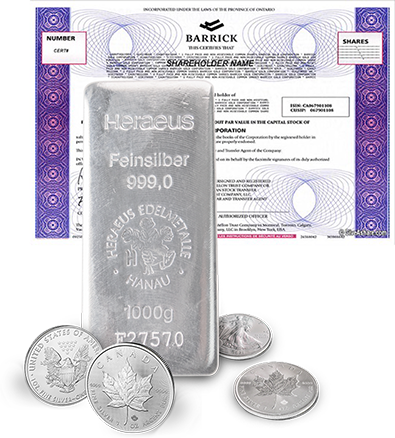
There's more than one way to get exposure to silver, but they aren't equivalent. Broadly, the choice is between owning the metal itself, physical bars and coins, or owning a claim on its price through mining stocks or an ETF.
Physical Silver: Bars and Coins
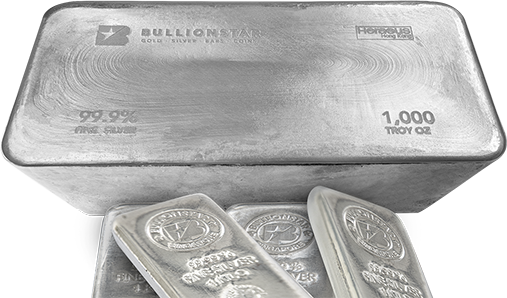
Buying physical silver bars or coins from a reputable dealer is the most direct route to owning silver. There’s no counterparty risk, no fund structure standing between you and the metal, just silver you hold or store yourself. Bars generally carry the lowest premium over spot, making them the more cost-efficient choice for a given amount of silver, while coins cost more per ounce but are easier to sell in smaller increments and are often more instantly recognisable. The two work more like sizing and liquidity decisions than a right-or-wrong choice; our full Should I Invest in Precious Metals Bars or Coins? comparison breaks it down for both metals.
Silver Mining Stocks and Silver ETFs
Mining stocks give you leveraged exposure to the silver price, since a miner's profits move more than the metal itself, but that leverage runs in both directions and comes bundled with risks that have nothing to do with silver: operational setbacks, management decisions, and jurisdictional risk. You're betting on a company as much as on silver.
Silver ETFs offer market-traded convenience without arranging your own storage, but you don't own specific, identifiable silver. You own shares in a fund that holds silver (or, in some structures, silver futures) on investors' collective behalf, and redeeming those shares for physical metal is typically restricted or unavailable to retail investors.
Neither is wrong for what it's built to do, but neither replaces owning the metal itself. That's the direct route back to the case this page opened with: physical silver, held in your own name or possession, is the only option here with no fund, custodian, or company standing between you and what you own.
If you've settled on physical silver and want the practical comparison of dealers, purchase sizes, and where to actually buy, our How to Invest in Silver guide covers that in detail.
The Cost of Owning Silver
Silver's case is honest about a trade-off: it costs more to own, as a share of what you're actually holding, than gold does.
A Higher Premium as a Share of Value
A one-ounce silver coin costs roughly the same to mint, package, and ship as a one-ounce gold coin, but that fixed cost sits on top of a metal worth a small fraction as much. The result is that silver coins generally carry a much higher premium than equivalent gold coins. Large bars can bring the premium down considerably as the fixed costs of production have less of an impact. The pattern holds generally: the smaller and more retail-oriented the silver product, the more the fixed costs of making it eat into what you're paying for.
Storage Costs More Too
The bulk problem covered earlier compounds here. Because silver at current prices runs roughly 67 ounces to gold's one for the same dollar value, storing a meaningful silver position takes up substantially more vault space, and vault fees typically reflect that: BullionStar's own storage fee for silver runs 0.59% per annum, against 0.39% for gold. Silver costs more to store both in absolute space and as a percentage of what it's worth.
Silver's Tax Problem in Many Countries, and Singapore's Exception
The bigger cost, in many jurisdictions, is tax. Investment-grade gold is VAT-exempt across the UK and EU, but silver typically isn't. In the UK, for example, physical silver bullion carries the full 20% VAT rate, with no equivalent exemption for retail investors. That single line item can dwarf every premium and storage cost combined for buyers in those markets.
Singapore takes a different approach. Silver meeting the Investment Precious Metals (IPM) purity standard is GST-exempt, the same as gold and platinum, so buyers aren't paying a 20% tax just to own the metal in the first place. It's arguably the single biggest reason silver ownership makes more sense in Singapore than in many Western markets. See our guide on tax-free bullion for the full detail.
Buying Directly at Spot
BullionStar periodically runs promotions that let customers buy specific silver products directly at spot price, with no premium at all. Separately, and always available rather than promotional, the 1kg No-Spread Silver Bar removes a different cost entirely: for orders of 100 bars or more, the buy price and sell price are identical, eliminating the bid-ask spread that normally applies to every purchase and sale.
Together, these give international buyers, especially those in markets charging VAT or GST on silver, a genuine way to cut or eliminate the premium and spread costs covered above. But that saving only holds if the metal stays in Singapore. Have it shipped home instead, and many countries will charge import VAT or duty on the way in, potentially wiping out the exact saving you bought at spot to capture. Keeping it in high-security storage in Singapore avoids that entirely, since the metal is never imported into a taxed jurisdiction in the first place.
Storing outside your home country is also worth something on its own, separate from tax: it's a form of geographic diversification, holding part of your wealth outside your home jurisdiction's banking system and legal reach, in one of the world's most politically stable and property-rights-respecting countries.
Silver in Singapore: Buying, Storing and Selling
Singapore isn't just a favourable place to hold silver tax-wise, it's also set up to make the whole process (buying, storing, and eventually selling) straightforward in a way many markets aren't.
Buying Silver in Singapore
You can buy physical silver from BullionStar two ways: online, or in person at our Bullion Center at 45 New Bridge Road, directly across from Clarke Quay MRT station, open daily from 11am to 7pm (closed public holidays), with walk-ins welcome and no appointment needed. The showroom carries silver bars and coins from mints and refiners worldwide across its display cases, so you can see and compare products before buying rather than choosing from photos alone.
For anyone who'd rather build a position gradually than commit to a lump sum, BullionStar's Bullion Savings Programme (BSP) lets you buy silver by the gram, starting from as little as 1 gram at a time, with no need to buy a full coin or bar upfront. Pairing BSP with AutoInvest turns that into a recurring purchase you can set and leave running, dollar-cost averaging into silver the same way you might into gold.
Storing Silver Safely
Silver bought through BullionStar is stored in Le Freeport, Singapore's high-security vault facility, under the same allocated storage model used for gold: specific, identifiable metal set aside as yours. Given silver's bulk, covered earlier on this page, secure professional storage matters more here than it does for gold, if only because a meaningful silver position is a lot of physical weight to store safely yourself. Vault storage runs 0.59% per annum for silver, and BullionStar publishes its BSP backing daily, so you can verify holdings are actually there rather than taking that on faith.
Selling Silver When You're Ready
Selling is the part people often overlook when buying silver, and it matters just as much. BullionStar offers a standing buy-back service with live buy-back prices published at all times, so you're not left trying to find your own buyer or guessing what a fair price looks like when you want to exit. That applies whether you're selling bars, coins, or a BSP gram balance.
Frequently Asked Questions
Is silver a good long-term investment?
It can be, depending on your goals and risk tolerance. Physical silver carries no counterparty risk, has a monetary history as old as gold's, and benefits from structural industrial demand gold doesn't have. It also comes with higher volatility and higher costs as a share of value. For the full decision framework, see Is Silver a Good Investment?
How much silver should I own?
Most portfolio allocation frameworks suggest keeping precious metals to around 5–10% of a well-diversified portfolio, combining gold and silver rather than treating either as a primary growth engine. Within that allocation, how much goes to silver specifically versus gold comes down to your appetite for silver's extra volatility. Our Gold & Silver Portfolio Allocation guide breaks down the main frameworks in detail.
Is silver taxed in Singapore?
In most cases, no. Silver meeting the Investment Precious Metals (IPM) purity standard is exempt from GST in Singapore, the same treatment gold receives, and individuals pay no capital gains tax on selling physical silver. That's a meaningful difference from markets like the UK and EU, where investment gold is VAT-exempt but silver typically isn't. See our tax-free bullion guide for the full details.
Is it better to buy silver bars or coins?
It depends on your priorities. Bars generally carry a lower premium over spot, making them more cost-efficient for a given amount of silver. Coins cost more, but are easier to sell in smaller increments and are often more instantly recognisable. Our full Should I Invest in Precious Metals Bars or Coins? comparison covers both metals.
Why is silver more volatile than gold?
Gold is bought almost entirely to be held, with industrial and technology uses accounting for a small fraction of total demand. Silver is the opposite: close to 59% of annual demand comes from industrial applications like electronics and solar. That extra source of demand adds an extra source of price swings on top of the safe-haven buying silver shares with gold, in both directions.
Where can I store silver safely?
BullionStar stores customer silver in Le Freeport, Singapore's high-security vault facility, under allocated storage, specific metal set aside as yours, not pooled with other holdings. Storing meaningful amounts of silver yourself is also a genuinely bulkier proposition than storing an equivalent value of gold, which is worth factoring into any decision you make.
Start Investing in Silver
Silver's case comes down to two things working together: a monetary history backed by real industrial demand, and, if you're buying from Singapore, none of the tax drag that erodes the case for silver in many other markets. Investment-grade silver here is GST-exempt, so you're not handing money straight to a tax authority before you've even started.
Getting started doesn't require a large sum or a lump-sum decision. Browse our full range of silver bullion, including silver bars for the lowest cost per ounce and silver coins for smaller, more flexible increments, or ease in gradually with the Bullion Savings Programme, buying by the gram and pairing it with AutoInvest to build a position over time.
Store what you buy securely and tax-efficiently in Singapore with vault storage, and when you're ready to sell, BullionStar's buy-back service means you're never left trying to find your own buyer. Have questions? Get in touch with our team at support@bullionstar.com, who will be happy to assist.
 Locate
 Contact
 Help