 Contact
 Help








Austria Gold Reserves: How Much Gold Does Austria Have?


Austria holds about 280 tonnes of gold, making it the 20th-largest of the official gold reserves in the world. The gold is owned and managed by the Oesterreichische Nationalbank (OeNB), Austria’s central bank, and makes up nearly three-quarters of its official reserves. The amount has not changed since 2007.
Austria’s gold is split almost evenly between home and abroad. About half is stored in Vienna, in the vaults of the OeNB and of the Austrian Mint, which the central bank owns. The rest is held in London, Paris and Switzerland, where the OeNB says it can be used quickly in a crisis. None of it is held in the United States. That arrangement is relatively recent. As late as 2013, more than 80% of Austria’s gold was stored in London. Criticism from Austria’s Court of Audit led the OeNB to bring about 90 tonnes home, a move completed in 2018.
This page explains how much gold Austria has, where Austria’s gold reserves are stored, why they were repatriated, the OeNB’s link to the Austrian Mint, and how the reserve has changed over time.
Highlights
- Austria holds 279.99 tonnes of gold, the 20th-largest official gold reserve in the world, unchanged since 2007.
- About half of Austria’s gold is stored in Vienna, in the vaults of the Oesterreichische Nationalbank and the Austrian Mint, with the rest in London, Paris and Switzerland. None is held in the United States.
- After a critical Court of Audit report in 2015, the OeNB brought about 90 tonnes home from London, completing the move in 2018. Before that, more than 80% of Austria’s gold had been stored at the Bank of England.
- The OeNB wholly owns the Austrian Mint, maker of the Vienna Philharmonic gold coin, whose vaults also store part of Austria’s official gold.
- Austria’s gold peaked at about 657 tonnes in the 1980s, before sales in the 1990s and 2000s and a transfer to the European Central Bank reduced it to 280 tonnes.
How Much Gold Does Austria Have?
Austria holds 279.99 tonnes of gold, according to the World Gold Council. That’s about 9 million troy ounces, worth roughly €33 billion at current prices. The OeNB usually rounds the figure to 280 tonnes, held in about 22,400 standard large bars.
| Austria’s gold reserves | Figure |
|---|---|
| Total gold holdings | 279.99 tonnes |
| In troy ounces | About 9 million oz |
| Approximate value | About €33 billion |
| Share of total reserves | 73.59% |
| World ranking | 20th |
| Held in Austria | About 50% (around 139 tonnes) |
| Gold per resident | About 30 grams |
| Last change in holdings | 2007 (end of gold sales) |
Austria’s reserve is small next to its neighbours. Germany holds 3,350 tonnes, Italy 2,452 tonnes and Switzerland 1,040 tonnes. Like them, though, Austria keeps most of its official reserves in gold. At 73.59%, gold’s share is similar to the Netherlands and not far below Germany, Italy and France, where it is around 80%.
Relative to its population, Austria’s holding is substantial. Spread across around 9.2 million people, it works out at about 30 grams of gold per person. That’s similar to France and the Netherlands at around 34–35 grams, and well above the US at about 24 grams, though far below Switzerland at about 115 grams.
Where Is Austria’s Gold Stored?
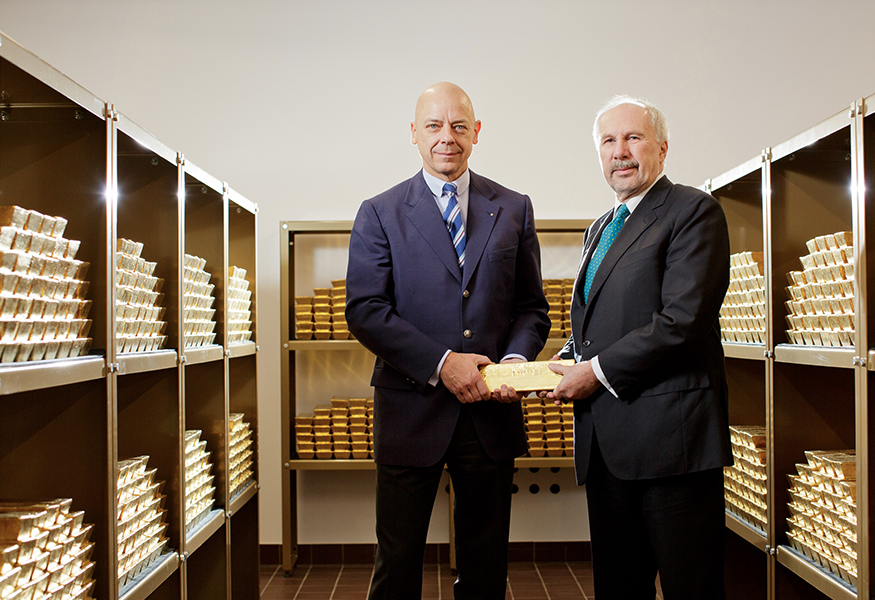
The OeNB keeps Austria’s gold in five locations, two in Vienna and three abroad. According to the OeNB, the gold is split as follows:
| Location | Tonnes (approx.) | Share |
|---|---|---|
| Vienna, OeNB vaults | 90 | 32% |
| Vienna, Austrian Mint vaults | 49 | 18% |
| London (Bank of England) | 84 | 30% |
| Paris | 50 | 18% |
| Switzerland | 7 | 2% |
Source: Oesterreichische Nationalbank. Shares calculated from tonnes.
The gold held in Austria, about 139 tonnes, is stored in the OeNB’s own vaults and in those of the Austrian Mint, the OeNB’s subsidiary. The other 141 tonnes are held at three of Europe’s main gold centres. The OeNB says gold “must be available quickly, even in difficult market conditions,” and that gold held at international trading hubs can be sold, swapped or used as collateral far more easily than gold held at home. Spreading the gold across several locations also reduces the risk of relying on any one of them.
Austria’s foreign storage also has historical roots. During the Cold War, keeping part of the reserve in the West was seen as a safeguard for a neutral country on the edge of the Iron Curtain. Unlike Germany, Italy and the Netherlands, Austria holds none of its gold in the United States. That has kept it out of recent debates about bringing gold home from New York.
The 2015 Audit Report and Repatriation
Until a decade ago, Austria’s gold was far more concentrated. At the end of 2013, 82% of the OeNB’s physical gold was stored at the Bank of England in London, with most of the rest in Vienna and a small amount in Switzerland.
In February 2015, Austria’s Court of Audit (Rechnungshof) published a critical report on the OeNB’s gold management. It found that the concentration in London created too much risk and that the storage contract with the Bank of England lacked adequate safeguards. It also highlighted how much of the gold had been working rather than sitting in vaults.
In 2009, only 44% of Austria’s gold was held as allocated physical bars, with the rest lent out or held in other gold products. The OeNB had since wound down its lending, and the amount of physical gold it held at the Bank of England rose from 75 tonnes in 2009 to 178 tonnes in 2013. The auditors recommended spreading the gold across more locations.
In May 2015, the OeNB announced a new storage plan to bring much of its gold home. The first 15 tonnes arrived in Vienna later that year, and by 2018 about 90 tonnes had been moved from London to Austria. Since then, the OeNB has also built up a holding in Paris. The share held in London has fallen from over 80% to about 30%, and roughly half of Austria’s gold is now at home.
The OeNB and the Austrian Mint
Austria’s central bank has an unusually close link to the bullion market. The OeNB wholly owns Münze Österreich, the Austrian Mint, one of the world’s oldest and best-known mints. Its history goes back more than 800 years, to 1194 in Vienna.
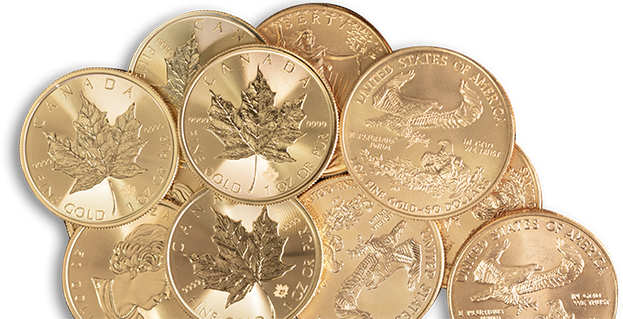
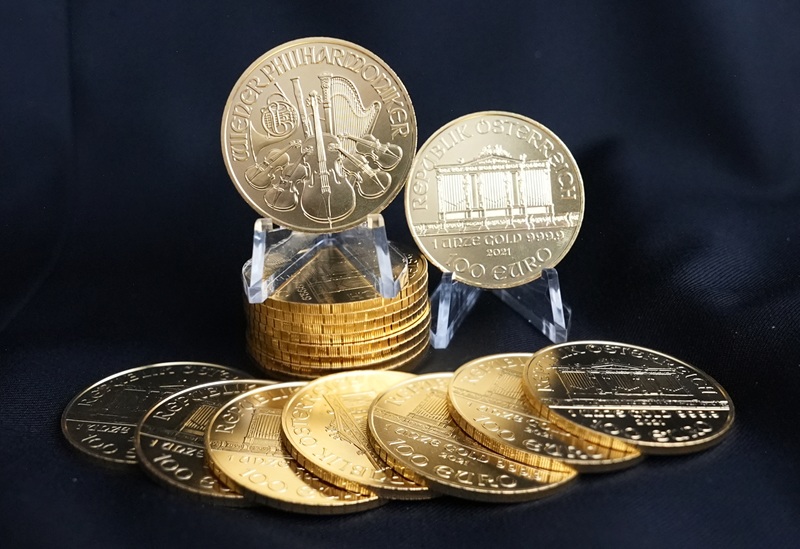
Most investors know the Austrian Mint for the Vienna Philharmonic, which it has struck in gold since 1989. The Philharmonic is one of the most widely traded bullion coins in the world and Europe’s best-known gold coin. Each coin is made from 99.99% pure gold and is legal tender in Austria, with a face value in euros.
The link between the two institutions is practical as well as corporate. The Austrian Mint’s vaults in Vienna hold around 49 tonnes of Austria’s official gold reserves, about a sixth of the total, alongside the gold stored in the OeNB’s own vaults. The OeNB itself does not sell gold to the public. It refers private buyers to the Austrian Mint or to specialist dealers instead.
That makes Austria one of the few countries where the central bank holding the national gold reserve also owns the mint producing a leading bullion coin.
History of Austria’s Gold Reserves
The Oesterreichische Nationalbank was founded in 1816. For much of its history, Austria’s currency was tied to gold, first under the Austro-Hungarian monetary system and later through the Austrian schilling.
Confiscation and Restitution
Austria lost its gold reserves after the Anschluss of 1938, when Nazi Germany annexed the country. Germany’s Reichsbank took over the Austrian National Bank and confiscated 78.2 tonnes of gold. After the Second World War, the Tripartite Commission for the Restitution of Monetary Gold returned 50.1 tonnes to Austria, so a large part of the pre-war reserve was never recovered.
Rebuilding and Peak
After the war, Austria rebuilt its reserve as its economy recovered. Under the Bretton Woods system, the schilling was linked to the US dollar and through it to gold. Austria’s growing export earnings allowed the OeNB to steadily add gold through the 1950s and 1960s. Holdings peaked at about 657 tonnes in the 1980s, more than twice today’s level.
Sales and the Euro
From the 1990s, Austria began to reduce its gold. It sold part of the reserve during that decade. When it adopted the euro in 1999, it transferred about 22 tonnes to the European Central Bank as part of its contribution to the ECB’s reserves.
The OeNB then sold a further 127.5 tonnes under the first and second Central Bank Gold Agreements. These agreements limited how much gold European central banks could sell each year. The sales cut Austria’s holdings from 407.5 tonnes in 2000 to 280 tonnes by 2007. The OeNB has not bought or sold any gold since. Like several other European central banks, it now describes gold as a key reserve asset that supports confidence in the euro and provides stability in a crisis.
Transparency and Audits
The OeNB has become more open about its gold over the past decade, particularly about where it is stored. It still publishes less than some other central banks, however.
How the Gold Is Checked
The OeNB says it checks its gold bars using precision weighing, ultrasound to examine the inside of the bar, and X-ray fluorescence to analyse the metal’s composition. The bars it holds are standard large bars that meet the London Bullion Market Association’s Good Delivery rules. Each one weighs about 12.5 kilograms and is at least 99.5% pure.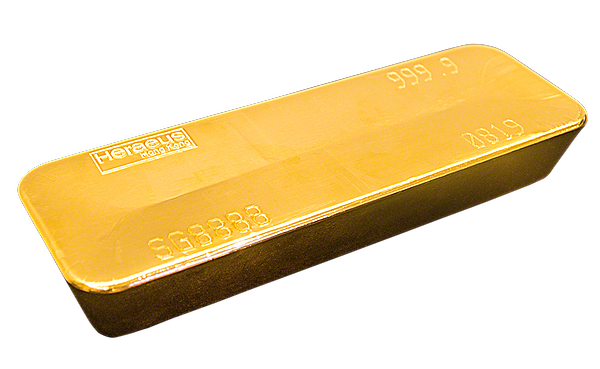
Regular audits of the gold held abroad began after the OeNB set up an audit programme in 2014. In May of that year, Austrian auditors visited the Bank of England. They checked a sample of 300 bars against the bar list, and weighed and tested 60 of them with ultrasound. The OeNB has since confirmed that it carries out audits of its gold in other locations as well.
Gold Lending
For many years, the OeNB used a large part of its gold to earn a return. In 2009, more than half of Austria’s gold was lent out or held in other gold products rather than as allocated physical bars. The OeNB reduced its lending as interest rates fell and after the Court of Audit’s criticism. It now says it may still use part of its gold held abroad to cover storage costs or earn a return, but that security and liquidity come first. The OeNB reports its gold on its balance sheet as “gold and gold receivables”, valued at market prices at the end of each year. That line does not show how much, if any, is lent out.
What the OeNB Doesn’t Publish
The OeNB does not publish its audit reports or a list of its gold bars. When asked in 2016, it confirmed that audits had taken place in the UK and Switzerland but declined to release the reports, and it said it does not publish a bar list. That puts Austria behind Germany’s Bundesbank, which has published a full list of its bars since 2015. It is in line with most other central banks, including France, Italy and the Netherlands.
Frequently Asked Questions
How much gold does Austria have?
Austria holds 279.99 tonnes of gold, usually rounded to 280 tonnes, according to the World Gold Council. That makes it the 20th-largest official gold reserve in the world. The amount has not changed since 2007.
Where is Austria’s gold stored?
About half of Austria’s gold, around 139 tonnes, is stored in Vienna, in the vaults of the Oesterreichische Nationalbank and the Austrian Mint. The rest is held abroad: about 84 tonnes in London, 50 tonnes in Paris and 7 tonnes in Switzerland.
Does Austria have gold in the United States?
No. Austria holds none of its gold reserves in the United States. Its gold held abroad is stored in London, Paris and Switzerland.
Did Austria repatriate its gold?
Yes. After Austria’s Court of Audit criticised the concentration of its gold in London in 2015, the OeNB brought about 90 tonnes home from London. The move was completed in 2018. Before then, more than 80% of Austria’s gold was held at the Bank of England.
Who owns the Austrian Mint?
The Austrian Mint, maker of the Vienna Philharmonic gold coin, is wholly owned by the Oesterreichische Nationalbank, Austria’s central bank. The Mint’s vaults in Vienna also store about 49 tonnes of Austria’s official gold reserves.
How much gold does Austria have per person?
Austria’s 280 tonnes work out at about 30 grams of gold per resident, based on a population of around 9.2 million.
From the OeNB’s Vaults to Your Own
Austria’s experience with its gold reserves raises the same questions every gold owner faces. The Court of Audit’s 2015 report criticised the OeNB for holding most of its gold in one place, and for lending much of it out rather than holding it as physical bars. Austria’s response was to bring part of its gold home, spread the rest across several trusted locations, and hold it as allocated bars that can be checked. Those are sound principles for private investors as well.
Individual investors can follow the same approach on a smaller scale. Gold bars from LBMA-accredited refiners meet the same purity standards that central banks rely on, and they are the most cost-effective way to hold larger amounts. Gold coins come in smaller sizes and are widely recognised. For a direct link to Austria’s gold, the Vienna Philharmonic gold coin is made by the Austrian Mint, the same institution that stores part of Austria’s national gold.
BullionStar offers vault storage at Le Freeport in Singapore, where customers’ gold is fully allocated and insured, not lent out, and owned outright. Every bar is photographed, holdings are independently audited, and customers can visit their gold in person. Customers can also have their purchases delivered to their home, or collect them from our Bullion Center in Singapore.
Subscribe to Gold University Articles
Copyright Information: BullionStar permits you to copy and publicize articles or information from the BullionStar Gold University provided that a link to the article's URL or to https://bullionstar.com is included in your introduction of the article or blog post together with the name BullionStar. The link must be target="_blank" without re="nofollow". All other rights are reserved. BullionStar reserves the right to withdraw the permission to copy content for any or all websites at any time.