 Contact
 Help
Help







The Royal Mint: Britain’s National Mint Since 886



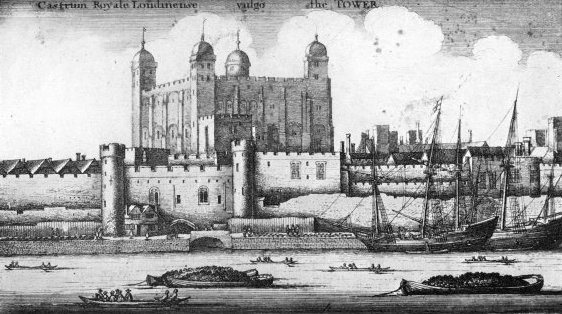
The Royal Mint is the United Kingdom’s national mint, and one of the oldest mints in the world. It dates its history to around 886, in the reign of Alfred the Great, and spent more than five centuries inside the Tower of London. Since 1968 it has worked from a single site at Llantrisant in South Wales.
The Royal Mint is owned by HM Treasury through the Royal Mint Trading Fund and runs as a commercial company, The Royal Mint Limited. Its core job is to make the UK’s circulating coins. It also makes commemorative and collector issues, official medals and bullion. Several of the world’s other major mints began as branches of The Royal Mint. The Perth Mint opened as a Royal Mint branch in 1899, and the Royal Canadian Mint started life as its Ottawa branch in 1908.
Unlike those two, The Royal Mint does not refine metal. It buys gold and silver that is already refined from refiners accredited by the London Bullion Market Association, and strikes it into coins and bars at Llantrisant. In bullion it is best known for two coins: the Britannia, in gold, silver and platinum, and the 22 karat gold Sovereign, which has been struck in its modern form since 1817. Since 2024 it has also recovered gold from discarded circuit boards at a plant on the Llantrisant site, which is a newer line of work.
This page covers who owns The Royal Mint and how it is structured, its history from Anglo-Saxon London to South Wales, what it produces, how to tell a genuine Britannia or Sovereign from a counterfeit, and how its premiums compare with other national mints.
Highlights
- The Royal Mint is the UK’s national mint, dating its history to around 886. It has been based at Llantrisant in South Wales since 1968.
- It is wholly owned by HM Treasury through the Royal Mint Trading Fund, and trades as a commercial company, The Royal Mint Limited.
- It does not refine metal. It buys gold and silver from LBMA-accredited refiners and strikes it into coins and bars.
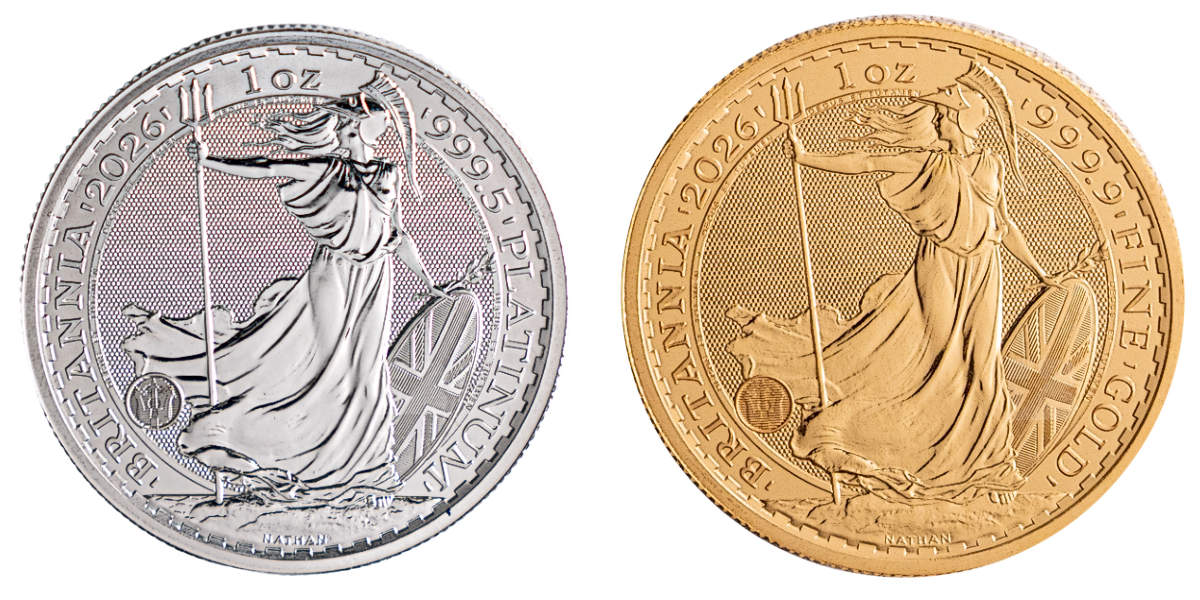
- Its best-known bullion coins are the Britannia, in gold, silver and platinum, and the 22 karat gold Sovereign. The Britannia has carried visual security features since 2021, and the Sovereign since 2026.
- As cash use falls, the Mint has stopped making circulating coins for other countries. Since 2024 it has recovered gold from electronic waste at its Llantrisant site.
Who Is The Royal Mint?
The Royal Mint is the UK’s official maker of coins, owned by HM Treasury and based at Llantrisant, near Cardiff in South Wales. Almost all its manufacturing, marketing and distribution happens on that single site, along with the precious metals recovery plant described below. Next door is a visitor attraction, the Royal Mint Experience, which opened in 2016 and received 52,851 visitors in the year to March 2025.
The Mint employed an average of 778 people in the year to March 2025, down from 899 the year before, as it restructured. That makes it larger than the Perth Mint, at around 690, and smaller than the Royal Canadian Mint, at 1,173. Unlike both of those, it doesn’t run a refinery. The Austrian Mint doesn’t either, and it has fewer than 200 staff.
Today it is mainly a precious metals business rather than a currency maker. In the year to 31 March 2025 revenue was £1,315.3 million, split as follows:
| Segment | Revenue, year to March 2025 |
|---|---|
| Precious metals investment (bullion coins, bars and related products) | £1,184.4 million, about nine tenths of the total |
| Consumer (commemorative coins, collector services and the Royal Mint Experience) | £97.5 million |
| Currency | £30.3 million, down from £65.6 million the year before |
It was a difficult year financially. The Mint made an operating loss of £47.3 million, and £31.7 million of that came from one-off costs. About £25.4 million was due to leaving the overseas coin business as the world becomes increasingly cash-free.
Before those costs, the operating loss was £15.3 million, against a £4.3 million profit the year before. As with the Austrian Mint, revenue here mostly tracks the price of the metal passing through the business, so the headline figure tells you little about how profitable it is.
Owned by HM Treasury
HM Treasury owns The Royal Mint through the Royal Mint Trading Fund, which was set up in 1975. Since 31 December 2009 the business has been run by The Royal Mint Limited, a company wholly owned by the Trading Fund, with its own board and chief executive. The Chancellor of the Exchequer is Master of the Mint, a title that goes with the office.
Its governance is spread across two other bodies. The Royal Mint Advisory Committee, sponsored by the Treasury, reviews designs for new UK coins. The Royal Mint Museum is a separate charity. It holds the Mint’s historic collection of coins, medals and minting equipment.
A Mint, Not a Refinery
The Royal Mint does not refine gold or silver. It buys metal that has already been refined from companies on the London Bullion Market Association’s Good Delivery List, then casts, blanks and strikes it at Llantrisant. The Mint is a member of the LBMA and of the London Platinum and Palladium Market, but it is not an accredited refiner itself. It joined the Singapore Bullion Market Association in January 2024.
It did once have a refinery. In 1852 the Royal Mint Refinery was leased to N M Rothschild & Sons, who ran it for more than a century before selling it to Engelhard in 1968. Gold refining at the site finally ended in 1998.
This puts The Royal Mint in the same position as the Austrian Mint, and apart from the Perth Mint and the Royal Canadian Mint, both of which run their own refineries. It doesn’t mean the metal is lower quality. The gold in a Britannia coin comes from accredited refiners. The Mint simply begins its work after the refining is done.
From Alfred the Great to Llantrisant
The Royal Mint dates itself to around 886, when Alfred the Great restored London as a centre for minting coins. Coin production across England, spread over many local mints, was gradually brought together in London, and by 1279 it was based inside the Tower of London. It stayed there for more than five hundred years.
In the early nineteenth century the Mint moved out of the Tower to a new building on Tower Hill, and in 1817 it launched the modern gold Sovereign. As Britain’s colonies found gold, it opened branch mints near the goldfields to turn the gold into Sovereigns:
| City | Country | Year | Mintmark |
|---|---|---|---|
| Sydney | Australia | 1855 | S |
| Melbourne | Australia | 1872 | M |
| Perth | Australia | 1899 | P |
| Ottawa | Canada | 1908 | C |
| Bombay | India | 1917 | I |
| Pretoria | South Africa | 1923 | SA |
Several of those branches are now major mints in their own right, including the Perth Mint, which passed to Western Australia in 1970, and the Royal Canadian Mint, which became independent of London in 1931.
Moving to decimal coinage in 1971 meant replacing every coin in circulation, and Tower Hill could not produce them in the volumes needed. The Mint chose a new site at Llantrisant, Wales in 1967, and production began there in December 1968. London minting ended in November 1975, when the last coin struck at Tower Hill, a gold Sovereign, came off the press.
From Coins to Circuit Boards
The Royal Mint’s traditional business has been shrinking as people use less cash. In the year to March 2025, banks and post offices already held enough UK coins that the Treasury placed no orders for new circulating coinage, the first time that had happened.
The same year the Mint delivered its final order for another country and left the overseas coin market altogether. Overseas work had once made up much of the currency business. The Mint moved 139 staff from its currency operation into areas that are growing.
It has moved into two new areas recently. In August 2024 it opened a plant at Llantrisant that recovers gold from discarded circuit boards, the kind found in laptops, phones and televisions. It processed around 1,500 tonnes of circuit boards in its first year, from 110 suppliers. It uses room-temperature chemistry licensed from the Canadian company Excir, in which the Mint now holds a stake of about 8%. Much of the recovered gold goes into 886 by The Royal Mint, a jewellery brand launched in 2022.
The recovery business earned £0.9 million in revenue in its first year and lost £5.3 million, so it is still very small next to bullion.
What The Royal Mint Produces
The Royal Mint makes a wider range of products than many other mints. It still makes the UK’s circulating coinage, and it also makes commemorative and collector coins, official medals, and 886 jewellery from recovered gold. Through its Collector Services business and its 23.4% stake in the London dealer Sovereign Rarities, it also buys, authenticates and sells historic coins.
Bullion is by far the largest of its businesses. Royal Mint bullion includes investment coins in gold, silver and platinum and a range of gold and silver bars. That part of the business earned about nine tenths of the Mint’s revenue in 2024-25.
Bullion Coins
Two coins make up the core of the range. The Britannia is The Royal Mint’s modern bullion coin, launched in 1987. The Sovereign is its historic gold coin, struck in its modern form since 1817.
| Coin | Metal and fineness | Current bullion sizes | GST on Singapore delivery |
|---|---|---|---|
| Britannia | Gold, 999.9 (24 karat) | 1 oz, 1/2 oz, 1/4 oz, 1/10 oz | None (IPM) |
| Britannia | Silver, 999 | 1 oz, 1/10 oz | None (IPM) |
| Britannia | Platinum, 999.5 | 1 oz | None (IPM) |
| Sovereign | Gold, 916.7 (22 karat) | Quarter, Half, Full, Double | Gross Margin Scheme |
The Britannia has changed more than its design suggests. The gold coin was struck in 22 karat gold until 2012 and has been 999.9 fine since 2013. The silver coin moved from 958 to 999 fine in the same year. A platinum version followed in 2018. They have included built-in security features since 2021, which the next section covers.
The Sovereign was the British Empire’s £1 coin, and circulated around the world in the 19th and early-20th centuries. It contains 0.2354 troy ounces of pure gold in a coin weighing 7.98 grams, alloyed with a little copper for hardness. The 2026 issue added security features for the first time, and went back to a traditional yellow gold alloy.
At 91.67% gold, the Sovereign falls below the 99.5% purity threshold for Investment Precious Metals in Singapore. That puts it in the same position as the gold Krugerrand. In the UK, by contrast, the Sovereign and the Britannia are both legal tender, which exempts them from Capital Gains Tax, and that tax treatment is a large part of why they are especially popular there.
Alongside these two flagship coins, the Mint issues bullion coins in numerous design series. The Queen’s Beasts ran from 2016 to 2021, and the Royal Tudor Beasts followed from 2022 to 2026. There is also an annual Lunar series, which began in 2014 and returned to its first zodiac animal with the 2026 Year of the Horse. More recently the Myths and Legends series has joined them, alongside series celebrating James Bond, the Royal Arms, George and the Dragon, and collaborations with the US Mint such as the Britannia and Liberty series. These coins are priced from their metal content like any other bullion coin, but the design usually adds a little to the premium and some variety to the mint’s range.
Minted and Cast Bars
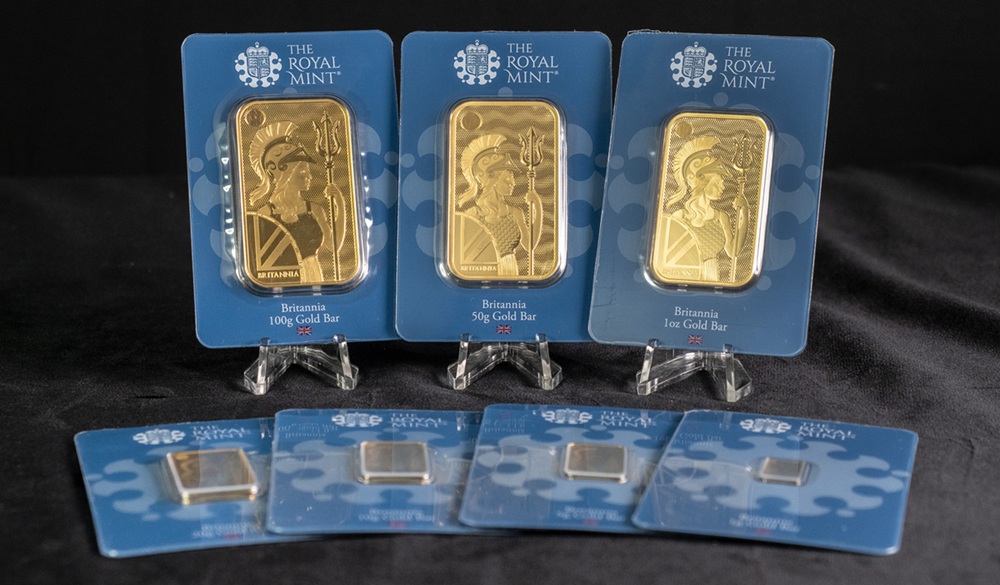
The Royal Mint’s minted gold bars carry the Britannia design and the Mint’s own logo. Minted bars run from 1 gram to 100 grams, including a 1 oz bar, and the range also includes cast bars of 500 grams and 1 kilogram. Each minted bar carries visual security features and comes sealed in serialised, tamper-evident CertiEye packaging, covered in the next section. The Mint also makes silver bars, and commemorative bars celebrating pop culture, religious events and more.
As we saw above, The Royal Mint does not refine, so the metal in these bars comes from accredited refiners. Their appeal is the brand name and the security packaging rather than anything about the gold inside, which is the same 999.9 metal you would get from any LBMA-accredited refiner.
What We Stock
At BullionStar we carry the Britannia coins in troy ounce and fractional sizes. We also stock full and half Sovereigns, a range of Royal Arms, Queen’s Beasts and Royal Tudor Beasts coins, and Britannia gold bars from 1 gram to 100 grams.
If the year doesn’t matter to you, our various-year 1 oz gold Britannias, 1 oz silver Britannias and 1 oz platinum Britannias are usually the cheaper way in. Browse our full range of gold coins, silver coins, platinum coins and gold bars.
How to Identify a Genuine Britannia or Sovereign
For most of their history, neither of The Royal Mint’s two main bullion coins had any built-in security. Both do now, but many coins in circulation predate the change. Over the last few years the Mint has gone further than almost any other mint in building security into the coins themselves, starting with the Britannia in 2021 and extending it to the Sovereign in 2026. How you check a coin depends mostly on when it was struck. A recent Britannia or Sovereign can be checked by eye, just by tilting it in the light. For an older coin you have to measure it, and with older Sovereigns in particular it is worth taking care.
The Britannia’s Security Features
Since 2021, every Britannia bullion coin has carried four security features, except the 1/4 oz and 1/10 oz silver coins. The Royal Mint introduced them as the most visually secure bullion coin in the world. None of the four needs equipment to check, only a good light and a steady hand.
The first is a latent image in a small panel near the rim, which switches between a padlock and a trident as the coin is tilted. The second is surface animation: fine laser-cut detail behind the figure of Britannia makes the waves appear to move when the coin is turned. The third is micro-text reading DECUS ET TUTAMEN, “an ornament and a safeguard”, which is small enough that you will need a loupe to read it cleanly. The fourth is tincture lines, used on the Union flag on Britannia’s shield.
The Mint offers no app or database for Britannias, and the checks are designed to be done by eye. A Britannia dated 2021 or later that is missing any of these features, or where the latent image doesn’t change as the coin moves, should be treated as suspect. Britannias struck before 2021 have none of these features, so they need the measurement checks described below.
The Sovereign’s Security Features
The 2026 bullion Sovereign was the first in the series to carry security features, and all four denominations have them, from the quarter to the double. The Royal Mint gave rising gold prices and the resulting interest from counterfeiters as the reason.
There are three features. On the reverse, micro-text carries the motto of the Order of the Garter, HONI SOIT QUI MAL Y PENSE. On the obverse, a latent image just beneath the King’s portrait switches between the Tudor Crown and the Tudor Rose as the coin is tilted, and a fine half-tone pattern fills the background. Proof Sovereigns do not carry these features.
Checking an Older Sovereign
Every bullion Sovereign struck before 2026 has to be checked the traditional way, and that covers almost all Sovereigns in existence. The Sovereign has been counterfeited more than almost any other gold coin. It is small, recognisable, and has been traded across the world for two centuries, so fakes aren’t uncommon.
Counterfeit Sovereigns tend to fall into three kinds. The crudest are cast or gold-plated base metal, and they usually give themselves away on weight, colour or a grainy surface. The second kind are coins with dates that do not exist, such as a London Sovereign dated 1918, when none were struck, or a portrait that doesn’t match the date. The most difficult are die-struck coins made from real gold at slightly the wrong purity. Some were very well made, particularly in the 1970s.
That last kind is why measurement matters, and also why it has limits. A crude fake fails on weight and dimensions. A real-gold fake at slightly the wrong fineness can come within a fraction of the right weight, and at that point only a proper metal test will tell you. Take the measurements first:
| Coin | Gross weight | Diameter |
|---|---|---|
| Full Sovereign | 7.98 g | 22.05 mm |
| Half Sovereign | 3.99 g | 19.30 mm |
| Gold Britannia, 1 oz | 31.10 g | 32.69 mm |
| Silver Britannia, 1 oz | 31.21 g | 38.61 mm |
For a coin you have any doubt about, calipers and a scale reading to a hundredth of a gram will catch most fakes. For the rest you need a density test or X-ray fluorescence. Our guides on how to test gold and how to test silver cover the methods in more detail. The easiest protection is to buy older Sovereigns only from a dealer that tests what it buys.
Security Features on Bars
The Royal Mint’s minted gold Britannia bars now carry the same kind of visual security as the coins. Like the Britannia coin, each bar carries a latent image, surface animation and micro-text, and you can check all three by tilting the bar in the light.
The packaging adds a second layer of protection. Each bar is sealed in a tamper-evident card with a UV watermark and a serial number that matches the one struck on the bar. The Royal Mint says the serial number serves as the bar’s certificate. The card also carries a CertiEye security mark, which you scan with the free CertiEye app on iOS or Android to confirm the packaging is authentic, without opening it.
It’s worth being clear about what that scan does and doesn’t check. CertiEye authenticates the printed security mark on the packaging, not the bar itself. That makes it a different kind of check from PAMP’s Veriscan, which reads the surface of the bar directly. A sealed pack that scans correctly, has an intact seal and has a serial number matching the bar is a strong combination.
The Royal Mint’s 100 gram silver Britannia bar comes in a simpler serialised blister pack, without the CertiEye mark.
Royal Mint Prices and Premiums
Like any bullion coin, a Britannia is priced from the live spot price of the metal it contains, plus a premium that covers minting, packaging and distribution. The premium is the part set by the mint and the dealer, and it is where Britannias from The Royal Mint compare well.
The table below compares 2026 one ounce gold coins from our range, priced at the same moment at the time of writing.
| 2026 one ounce gold coin | Premium over spot |
|---|---|
| UK Britannia (Royal Mint) | 3.82% |
| Australian Kangaroo (Perth Mint) | 3.82% |
| Canadian Maple Leaf (Royal Canadian Mint) | 4.01% |
| Vienna Philharmonic (Austrian Mint) | 4.43% |
| American Buffalo (US Mint) | 7.24% |
The Britannia sits at the low end of that group. What makes this notable is what the premium buys. Of the coins in the table, the Britannia carries the most extensive built-in security, with four visual features on every coin since 2021. Yet you pay less for it than for a Philharmonic, which has none. The Royal Mint has absorbed the cost of the security into a price that competes with the plainest coins in the market.
Silver shows the same pattern, although premiums on silver are a much larger share of the price, because the same striking and distribution costs are spread over a much cheaper metal.
| 2026 one ounce silver coin | Premium over spot |
|---|---|
| UK Britannia (Royal Mint) | 6.18% |
| Canadian Maple Leaf (Royal Canadian Mint) | 7.18% |
| Australian Kangaroo (Perth Mint) | 7.18% |
| Vienna Philharmonic (Austrian Mint) | 7.18% |
| American Eagle (US Mint) | 15.44% |
The platinum Britannia carried a premium of 12.57% against 14.05% for the platinum Philharmonic. Platinum trades in a much thinner market, which pushes premiums up regardless of which mint struck the coin.
You can often save on the premium by buying our various-year Britannias, where you get a genuine coin but not a guaranteed date. On silver in particular, the various-year coin carried 4.70% against 6.18% for the 2026 coin. The metal content is identical, so there’s no reason to pay for the date unless you want it.
You can check today’s prices on our gold price and silver price pages, and current buy-back rates on our sell gold and silver page.
Frequently Asked Questions
Is The Royal Mint government owned?
Yes. The Royal Mint is wholly owned by HM Treasury through the Royal Mint Trading Fund, and trades as a commercial company, The Royal Mint Limited. The Chancellor of the Exchequer holds the title of Master of the Mint. The Royal Mint is based at Llantrisant in South Wales, where it has made the UK’s coins since 1968.
Does The Royal Mint refine its own gold?
No. The Royal Mint buys gold and silver that has already been refined by accredited refiners, then strikes it into coins and bars at Llantrisant. It is a member of the London Bullion Market Association, but not an accredited refiner itself. Its historic refinery, the Royal Mint Refinery, stopped refining gold in 1998.
What is the difference between a Britannia and a Sovereign?
The Britannia is The Royal Mint’s modern bullion coin. It is struck in 999.9 fine gold, 999 fine silver and 999.5 fine platinum, in sizes up to one troy ounce. The Sovereign is the Mint’s historic gold coin: 22 karat, 91.67% pure, and containing 0.2354 troy ounces of gold. Britannias qualify as Investment Precious Metals in Singapore, so no GST applies. Sovereigns don’t qualify, because of their lower purity.
What purity are Britannia gold coins?
Britannia gold coins have been struck in 999.9 fine gold, which is 24 karat, since 2013. From the coin’s launch in 1987 until 2012 they were 22 karat, or 91.67% pure. Silver Britannias are 999 fine, and platinum Britannias are 999.5 fine.
Are Britannia coins CGT-free?
In the UK, yes. Britannias and Sovereigns are legal tender, which exempts them from UK Capital Gains Tax. That exemption applies only to UK taxpayers. Singapore levies no capital gains tax on precious metals at all, so the question doesn’t arise for Singapore residents. Investors elsewhere should check their local rules.
Are Britannia coins a good investment?
Britannias track the live price of the metal they contain, and they are competitively priced against other major bullion coins. They also carry four visual security features, which have been included on every gold coin and every 1 oz silver coin since 2021. As bullion coins from a government-owned mint, they are widely recognised by dealers worldwide.
Can I buy Royal Mint coins outside the UK?
Yes. The Royal Mint sells internationally and supplies bullion dealers around the world, and it joined the Singapore Bullion Market Association in 2024. At BullionStar we stock Britannias in gold, silver and platinum. They can be shipped internationally, stored in our Singapore vault, or collected from our Bullion Center.
Buying and Selling Royal Mint Bullion
The Royal Mint is one of the oldest institutions in Britain, and it has changed more in the last few years than in the half century since it moved to Wales. With little demand left for new circulating coins, its future rests on precious metals. Its bullion reflects that. The Britannia now combines four visual security features with premiums that compete with the plainest coins on the market. Its minted gold bars carry the same kind of security, in serialised CertiEye packaging.
For buyers in Singapore, the Britannia is the simplest way into the range. Gold, silver and platinum Britannias all qualify as Investment Precious Metals, so no GST applies on Singapore deliveries, and Singapore levies no capital gains tax when you sell. The 22 karat Sovereign falls outside the IPM rules and is sold under the Gross Margin Scheme instead.
When you come to sell, we buy Royal Mint bullion back at a live quoted price, whether or not you bought it from us. Metal held in our vault can be sold back online without being shipped anywhere first.
Looking to add Royal Mint bullion to your holdings? Browse our full range of gold coins, silver coins, platinum coins and gold bars, including the Britannia. Our products can be shipped internationally, stored in our high-security vault, or collected from our Bullion Center in Singapore.
Subscribe to Gold University Articles
Copyright Information: BullionStar permits you to copy and publicize articles or information from the BullionStar Gold University provided that a link to the article's URL or to https://bullionstar.com is included in your introduction of the article or blog post together with the name BullionStar. The link must be target="_blank" without re="nofollow". All other rights are reserved. BullionStar reserves the right to withdraw the permission to copy content for any or all websites at any time.