 Contact
 Help
Help







The United States Mint: America’s National Mint Since 1792



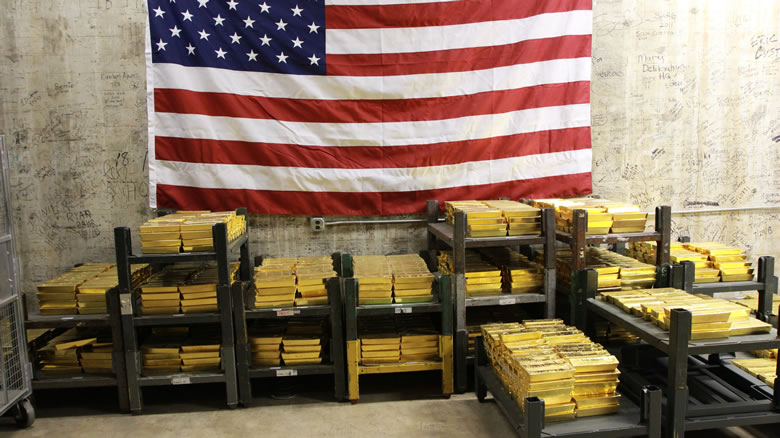
The United States Mint is the national mint of the United States of America, and a bureau of the US Treasury. Congress created it with the Coinage Act of 1792, and it opened that year in Philadelphia, then the nation’s capital. It remains the only maker of legal tender coins in the US, shipping around eight billion circulating coins in the 2025 fiscal year. It also makes collector and commemorative coins, national medals and bullion coins, and it is the custodian of most of America’s gold reserves, held at Fort Knox and elsewhere.
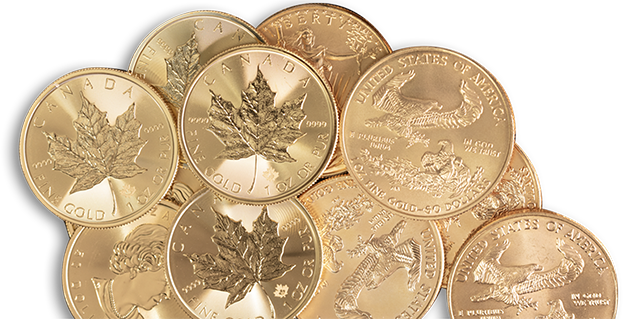
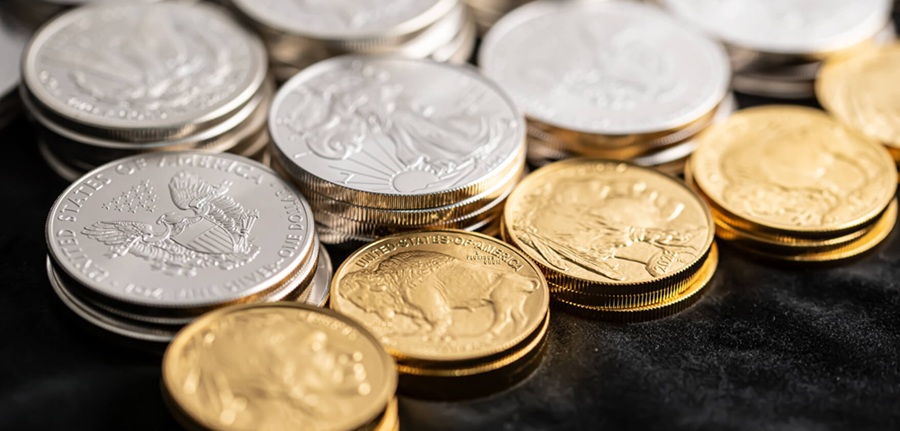
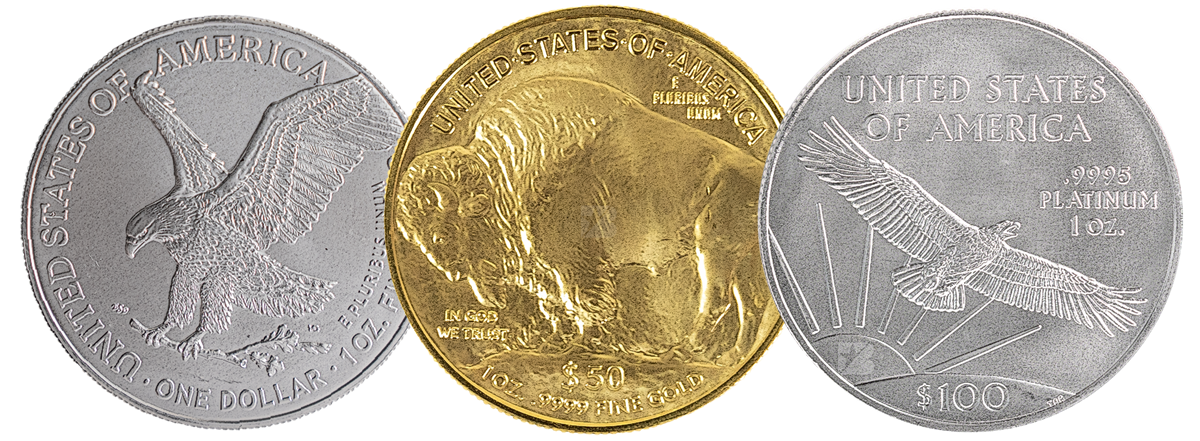
In bullion it is best known for the American Eagle, struck in gold, silver and platinum, and the American Gold Buffalo, the Mint’s pure gold coin. The two gold coins make an interesting pair. The Gold Eagle is 22 karat, alloyed for hardness like the Krugerrand and the Sovereign. The Buffalo is 24 karat, 999.9 fine, the US Mint’s answer to the Maple Leaf. The Mint also sells its bullion differently from most of its peers. It doesn’t sell bullion coins to the public at all, only to a small group of Authorized Purchasers, and that has a lot to do with why American Eagles tend to carry higher premiums than other national coins.
This page covers how the US Mint is structured and where it works, why it buys its metal rather than refining it, what it produces, how to tell a genuine American Silver Eagle from a counterfeit, and how its premiums compare with other national mints.
Highlights
- The United States Mint is a bureau of the US Treasury, created by the Coinage Act of 1792. It is the only maker of legal tender coins in the United States.
- It works from six sites: Philadelphia, Denver, San Francisco, West Point, Fort Knox and its Washington DC headquarters. It is also the custodian of most of America’s official gold reserves.
- The US Mint does not refine metal. Gold for the American Gold Eagle must by law be newly mined in the United States.
- Its bullion coins are the American Eagle in gold, silver and platinum, and the 24 karat American Gold Buffalo. It makes no bullion bars.
- The Mint sells its bullion coins only to a small group of Authorized Purchasers, never directly to the public, which is a large part of why its coins carry higher premiums.
Who Is the United States Mint?
The United States Mint is the bureau of the US Treasury that makes the nation’s coins. It works across six sites and employed nearly 1,400 people in the 2025 fiscal year:
| Facility | What it does |
|---|---|
| Philadelphia | Circulating coins, dies, and all design, sculpting and engraving |
| Denver | Circulating coins and dies |
| San Francisco | Proof and collector coins |
| West Point | Bullion and collector coins in gold, silver and platinum, and storage of reserve gold |
| Fort Knox | The United States Bullion Depository, which stores gold and does no minting |
| Washington DC | Headquarters |
Circulating coinage is the Mint’s statutory job, and the penny is where that job has recently changed most. In the 2025 fiscal year the Mint shipped around eight billion coins to the Federal Reserve Banks, and 4.8 billion of them were cents. Each cent cost 3.02 cents to make and distribute. That was the twentieth consecutive year in which the penny cost more than its face value. The Treasury suspended penny production that year, and the final circulating cent was struck in Philadelphia in November 2025. Cents already in circulation remain legal tender.
Revenue in the 2025 fiscal year came to $2,624.2 million:
| Programme | Revenue, fiscal year to September 2025 |
|---|---|
| Bullion coins | $1,594.4 million, about three fifths of the total |
| Circulating coins | $539.7 million |
| Numismatic (collector) products | $490.1 million |
The headline figure tells you more about metal prices than about profit. The Mint sold 15.0 million ounces of bullion coins, down from 26.9 million the year before, and made a net income on them of just $11.5 million, a margin of 0.7%. Its silver programme recorded a loss, mainly because of how the Mint hedges its silver stock. For the year as a whole, the Mint made no transfer to the Treasury’s General Fund.
Part of the US Treasury
Unlike The Royal Mint, which is a company owned by its Treasury, the US Mint is part of the Treasury itself. It has been a bureau of the Department of the Treasury since 1873, and pays its own way.
Since 1996 the Mint has operated under the United States Mint Public Enterprise Fund, which lets it run without an annual appropriation from Congress. Its costs are paid from the sale of circulating coins to the Federal Reserve Banks, bullion coins to Authorized Purchasers, and collector products to the public. Any revenue beyond what the fund needs goes to the Treasury.
A Mint, Not a Refinery
Like The Royal Mint and the Austrian Mint, the US Mint does not refine metal. It buys ready-made blanks, the plain metal discs that coins are struck from. According to its annual report, circulating coin blanks come from three vendors and precious metal blanks from four suppliers. The Mint’s own work starts at the press.
Where the metal comes from is set by law. Gold for the American Gold Eagle must be newly mined from natural deposits in the United States or its territories. Silver for the American Silver Eagle is also sourced from US deposits. Few bullion coins anywhere carry a legal requirement on where their metal is mined, and it is one reason the US Mint has at times struggled to match its output to demand.
Fort Knox and the US Gold Reserves
The Mint is also the custodian of most of the official US gold reserves. At the end of September 2025 it held 245.3 million fine troy ounces of gold in “deep storage”, which is roughly 7,629 tonnes. The gold is in sealed vaults at Fort Knox, Denver and West Point, and consists mainly of gold bars. A further 2.8 million ounces is held as working stock, which the Mint can use to make coins.
The reserve is carried on the Mint’s books at a statutory price of $42.2222 an ounce, a rate fixed in 1973. That gives a book value of $10.4 billion, against a market value on the same day of around $938 billion. How that gold is held and audited is a subject in its own right, and we cover it on our page on US gold reserves.
From Philadelphia to the Semiquincentennial
The Coinage Act of 1792 created the Mint and defined the new US dollar, and the first mint opened in Philadelphia that year. As gold was found in the south and west, branch mints followed. New Orleans, Charlotte and Dahlonega opened in 1838, San Francisco in 1854 and Carson City in 1870. Denver began striking coins in 1906. Of those branches, only San Francisco and Denver still operate.
The twentieth century added the Mint’s two gold facilities. The United States Bullion Depository at Fort Knox was completed in 1936 and received its first gold in 1937. West Point opened as a bullion depository in 1938 and became an official mint facility in 1988. By then the Mint had launched its modern bullion programme: the American Eagle in 1986, the Platinum Eagle in 1997, the Gold Buffalo in 2006 and the Palladium Eagle in 2017.
In 2026 the Mint is marking the 250th anniversary of American independence with a one-year set of commemorative designs on its circulating coins. The quarter, dime and half dollar all carry special designs for the year, dated 1776–2026, alongside a range of anniversary collector coins in gold and silver.
What the US Mint Produces
The US Mint makes three kinds of products. The first is circulating coinage for the Federal Reserve Banks. The second is collector products sold directly to the public, including proof and uncirculated coins, commemoratives, and national medals such as the Congressional Gold Medal. The third is bullion coins, sold only through Authorized Purchasers. It makes no bullion bars. US Mint gold coins and US Mint silver coins for investors are all issued under two programmes, the American Eagle and the American Buffalo.
Bullion Coins
| Coin | First issued | Metal and fineness | Bullion sizes | GST on Singapore delivery |
|---|---|---|---|---|
| American Gold Eagle | 1986 | Gold, 916.7 (22 karat) | 1 oz, 1/2 oz, 1/4 oz, 1/10 oz | Gross Margin Scheme |
| American Gold Buffalo | 2006 | Gold, 999.9 (24 karat) | 1 oz | None (IPM) |
| American Silver Eagle | 1986 | Silver, 999 | 1 oz | None (IPM) |
| American Platinum Eagle | 1997 | Platinum, 999.5 | 1 oz | None (IPM) |
| American Palladium Eagle | 2017 | Palladium, 999.5 | 1 oz | Standard GST |
The Gold Eagle’s fineness surprises many buyers. Most modern bullion coins are 999.9 fine, but the Gold Eagle is struck in 22 karat gold, alloyed with silver and copper to make it harder wearing. That makes it the same kind of coin as the Krugerrand and the Sovereign. Each coin still contains its full stated weight of pure gold, the alloy simply makes it heavier: a 1 oz Gold Eagle weighs 33.93 grams. It also means the Gold Eagle doesn’t qualify as an Investment Precious Metal in Singapore.
The Buffalo is the US Mint’s answer to that. It was launched in 2006 as the first 24 karat gold coin the United States had ever issued, and it competes directly with other 9999 fine gold coins like the Maple Leaf and the Britannia. For buyers in Singapore it is the GST-free way to own US Mint gold.
The Silver Eagle is the Mint’s highest-volume bullion product. In the 2025 fiscal year it accounted for all 14.6 million ounces of silver bullion the Mint sold. In 2021 both the silver and gold Eagles moved to new reverse designs, known as Type 2, which introduced the edge security feature covered in the next section.
Platinum and palladium are much smaller programmes. The Mint sold no platinum or palladium bullion coins at all in the 2025 fiscal year. The Palladium Eagle also falls outside Singapore’s IPM rules, which cover only gold, silver and platinum.
Circulating and Collector Coins
Circulating coins are the Mint’s statutory work, and in the 2025 fiscal year they made up around a fifth of its revenue. On the collector side, it sells proof and uncirculated versions of its bullion and circulating coins, commemorative coins authorised by Congress, and annual sets. In 2026 these include the Semiquincentennial issues. None of these are bullion products. They are priced for collectors, usually at a significant premium to their metal content.
What We Stock
At BullionStar we focus on the US Mint’s GST-free coins. We carry the American Gold Buffalo, the American Silver Eagle and the American Platinum Eagle in 1 oz. Browse our full range of gold coins, silver coins and platinum coins.
How to Identify a Genuine American Eagle
The US Mint builds less security into its bullion coins than most of its peers. The Royal Mint and the Royal Canadian Mint have added laser-cut latent images, micro-text and micro-engraved marks, and the Perth Mint uses micro-engraving on its gold coins. The American Eagle carries one visible feature on its edge. The Gold Buffalo and the Platinum Eagle carry none at all. Checking a US Mint coin therefore comes down to the same tools as checking a Philharmonic or an older Sovereign: a scale, calipers and a close look.
That matters more for the Eagle than for most coins. In a 2018 survey of US dealers, 43% said they had been offered fake Silver Eagles and 41% fake Gold Eagles, making them the two most counterfeited bullion coins in the survey. In 2023 the Anti-Counterfeiting Educational Foundation found fake Silver Eagles for sale on more than 300 websites.
The Type 2 Edge Notch
In 2021 the Mint redesigned the reverse of the Gold and Silver Eagles, and the new coins (known as Type 2) added a security feature to the edge. At one point on the reeded edge there is a small notch where the reeding breaks, as if a single reed were missing. The Mint says the coins also carry covert features, which it developed with the US Secret Service and doesn’t disclose.
The notch appears only on the 1 oz Gold and Silver Eagles from 2021 onwards, in every finish. Fractional Gold Eagles, the Gold Buffalo and the Platinum Eagle don’t have it. Its position also changes from year to year. It sat at six o’clock (with the obverse facing up) in 2021, and has moved since, so you should check it against another coin of the same year rather than against a fixed position.
The notch is useful, but it isn’t enough on its own. Counterfeiters have already copied it. A fake 2023 Silver Eagle examined by the NGC had its notch in exactly the right place. It gave itself away in other ways: it was mostly copper, zinc and nickel, it weighed 31.54 grams against the genuine 31.10, it was too thick, and it had 149 reeds on its edge against the genuine coin’s 201.
What the Coins Should Measure
That example shows where the real protection lies. A convincing design is cheap to copy. Matching the weight and the dimensions at the same time is not, because it requires the density of the real metal.
| One ounce coin | Gross weight | Diameter | Thickness |
|---|---|---|---|
| American Silver Eagle | 31.10 g | 40.60 mm | 2.98 mm |
| American Gold Eagle | 33.93 g | 32.70 mm | 2.87 mm |
| American Gold Buffalo | 31.11 g | 32.70 mm | 2.95 mm |
| American Platinum Eagle | 31.12 g | 32.70 mm | 2.39 mm |
The US Mint publishes weights and diameters but not thicknesses, so the thickness figures here come from secondary sources. The Gold Eagle is heavier than the others because of its 22 karat alloy, not because it contains more gold.
A counterfeit that looks right usually fails on weight, thickness or both, and a scale reading to a hundredth of a gram with a set of calipers will catch most of them. Our guides on how to test gold and how to test silver cover the methods in more detail, from density checks through to X-ray fluorescence. As with any heavily counterfeited coin, buying from a dealer that tests what it buys is the simplest protection.
US Mint Prices and Premiums
Every US Mint bullion coin is priced from the live spot price of the metal it contains, plus a premium. Premiums on American Eagles and Buffalos run higher than on most other national coins, and the main reason is how the Mint sells them.
Why US Mint Premiums Are Higher
The US Mint doesn’t sell bullion coins to the public, or to dealers in general. It sells only to a small group of Authorized Purchasers, currently thirteen, which are large wholesalers and dealers that must buy in bulk. For a Silver Eagle, the minimum is 25,000 ounces. The Mint charges them the metal price plus a fixed premium of its own: $3.05 per coin for a Silver Eagle, and 3% for a one ounce gold coin. The Authorized Purchasers then add their own margin before the coins reach retail dealers, who add theirs.
Most national mints also sell through wholesale distributors, but The Royal Mint and the Royal Canadian Mint sell bullion to the public directly as well. The US Mint doesn’t, so every coin passes through at least one wholesale layer. There is also a supply constraint. The US Mint is required to use newly mined US gold and US-sourced silver, and in the past it has rationed Silver Eagles to its Authorized Purchasers when blanks ran short. Coins that come through a narrow channel, in a market where demand has sometimes outrun supply, tend to carry a higher price.
How the Premiums Compare
The table below compares 2026 one ounce gold coins from our range, priced at the same moment at the time of writing.
| 2026 one ounce gold coin | Premium over spot |
|---|---|
| UK Britannia (Royal Mint) | 3.82% |
| Australian Kangaroo (Perth Mint) | 3.82% |
| Canadian Maple Leaf (Royal Canadian Mint) | 4.01% |
| Vienna Philharmonic (Austrian Mint) | 4.43% |
| American Gold Buffalo (US Mint) | 7.24% |
The Buffalo is the most expensive of the five. Its premium is almost double that of the Britannia and the Kangaroo, for the same ounce of 999.9 gold. The gap is wider still in silver.
| 2026 one ounce silver coin | Premium over spot |
|---|---|
| UK Britannia (Royal Mint) | 6.18% |
| Canadian Maple Leaf (Royal Canadian Mint) | 7.18% |
| Australian Kangaroo (Perth Mint) | 7.18% |
| Vienna Philharmonic (Austrian Mint) | 7.18% |
| American Silver Eagle (US Mint) | 15.44% |
A Silver Eagle cost more than twice the premium of any other coin in the table. For a buyer in Singapore, where every coin here is GST-free, that difference is simply the cost of choosing the Eagle.
There are still reasons to pay it. The Eagle is the most widely traded silver coin in the United States, it is instantly recognisable to American buyers, and it tends to command a higher buy-back price. For anyone who expects to sell in the US market, or who simply wants the coin, the premium buys something. For a buyer who only wants silver by the ounce, the other national coins in the table deliver it more cheaply.
You can check today’s prices on our gold price and silver price pages, and current buy-back rates on our sell gold and silver page.
Frequently Asked Questions
Is the US Mint government owned?
Yes. The United States Mint is a bureau of the US Department of the Treasury and has been part of the Treasury since 1873. It is led by a Director, who is nominated by the President and confirmed by the Senate. Since 1996 it has funded itself through the Public Enterprise Fund, from the sale of its coins, without an annual appropriation from Congress.
What purity is an American Gold Eagle?
The American Gold Eagle is 22 karat gold (91.67% pure), alloyed with small amounts of silver and copper for hardness. Each coin still contains its full stated weight of pure gold, so a 1 oz Gold Eagle holds one troy ounce of gold in a coin weighing 33.93 grams. Because it is below 99.5% purity, it does not qualify as an Investment Precious Metal in Singapore.
What is the difference between the Gold Eagle and the Gold Buffalo?
Both are US Mint gold bullion coins, but they differ in purity. The Gold Eagle, launched in 1986, is 22 karat (91.67%) gold and comes in four sizes from 1/10 oz to 1 oz. The Gold Buffalo, launched in 2006, is 24 karat (99.99%) gold and is struck in 1 oz. In Singapore, the Buffalo is GST-free as an Investment Precious Metal, while the Gold Eagle is not.
Does the US Mint make gold bars?
No. The US Mint makes bullion coins but no bullion bars. Its gold bullion products are the American Gold Eagle and the American Gold Buffalo coins. The gold bars it holds in the US reserves at Fort Knox and elsewhere are part of the national reserve, not products for sale.
Can I buy US Mint coins outside America?
Yes. The US Mint sells its bullion coins only to a small group of Authorized Purchasers, which distribute them to dealers around the world. At BullionStar we stock the American Gold Buffalo, the American Silver Eagle and the American Platinum Eagle. They can be shipped internationally, stored in our Singapore vault, or collected from our Bullion Center.
Are American Silver Eagles a good investment?
American Silver Eagles contain one troy ounce of 999 fine silver and track the live silver price. They are the most widely traded silver coin in the United States, and they are recognised by dealers worldwide. They usually carry a higher premium than other national silver coins, so buyers who want silver purely by the ounce may find Maple Leafs or Britannias cheaper.
Buying and Selling US Mint Bullion
The US Mint has been striking America’s coins since 1792. Its bullion programme is among the largest of any national mint by volume, with the Silver Eagle at its centre. For buyers outside the United States, what matters most is the choice of coin. In Singapore that means the American Gold Buffalo, the American Silver Eagle and the American Platinum Eagle. All three qualify as Investment Precious Metals, so no GST applies on Singapore deliveries, and Singapore levies no capital gains tax when you sell. The 22 karat Gold Eagle falls outside the IPM rules and is sold under the Gross Margin Scheme instead.
US Mint coins are among the most recognisable bullion coins in the world, but that recognition comes at a price. Because the Mint sells only through Authorized Purchasers, Eagles and Buffalos usually carry higher premiums than comparable national coins. They make most sense for buyers who value the coins themselves, or who expect to sell in the US market.
When you come to sell, we buy US Mint bullion back at a live quoted price, whether or not you bought it from us. Metal held in our vault can be sold back online without being shipped anywhere first.
Looking to add US Mint bullion to your holdings? Browse our full range of gold coins, silver coins and platinum coins, including the Buffalo and the Eagle. Our products can be shipped internationally, stored in our high-security vault, or collected from our Bullion Center in Singapore.
Subscribe to Gold University Articles
Copyright Information: BullionStar permits you to copy and publicize articles or information from the BullionStar Gold University provided that a link to the article's URL or to https://bullionstar.com is included in your introduction of the article or blog post together with the name BullionStar. The link must be target="_blank" without re="nofollow". All other rights are reserved. BullionStar reserves the right to withdraw the permission to copy content for any or all websites at any time.